The Hidden Cost of Ignoring White Label Seo Automation
Understand the hidden cost of ignoring white label SEO automation and how to use it without losing judgment, quality, or control.
What white label SEO automation really means
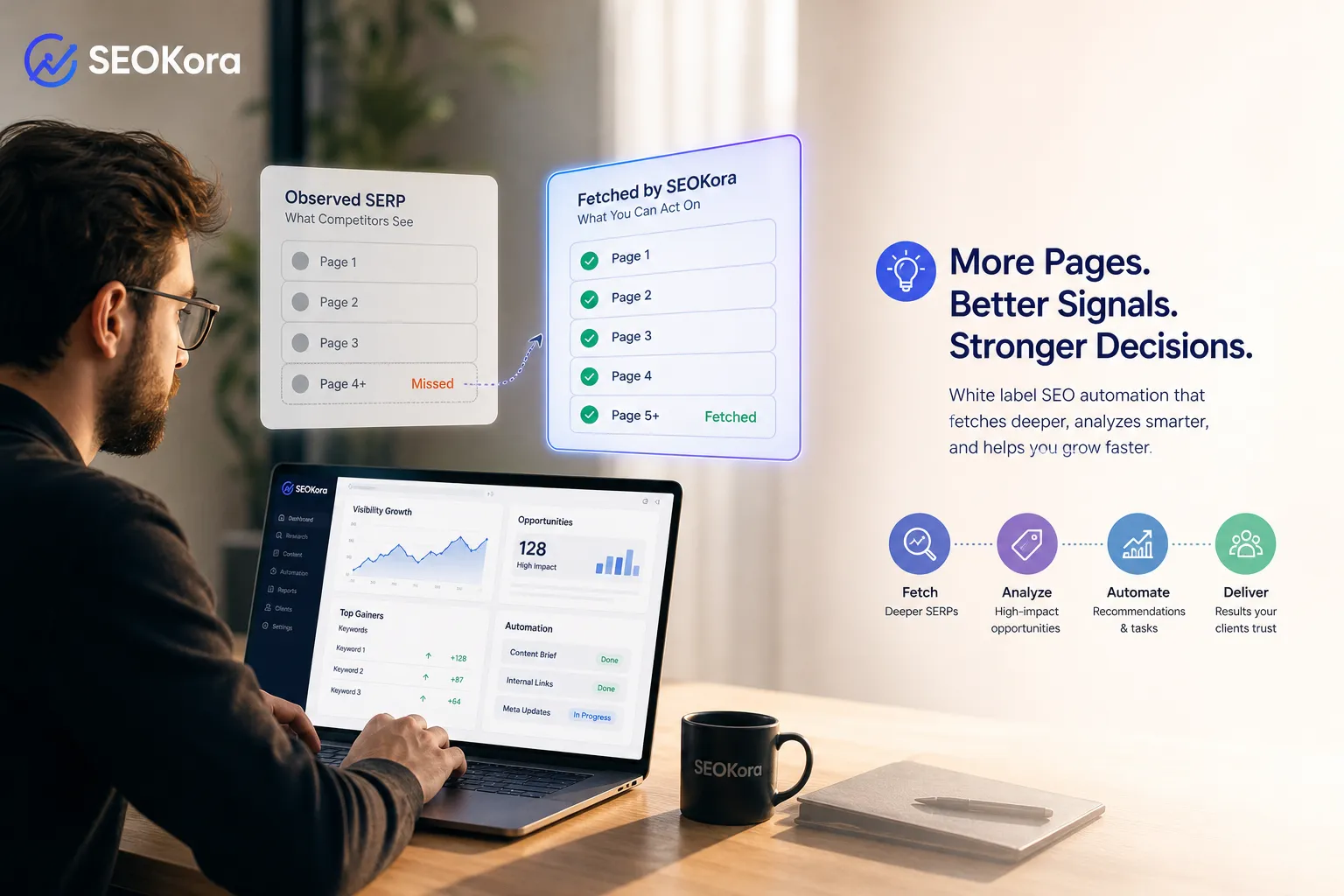
White label SEO automation means using software-driven SEO workflows that can be delivered under your own brand or client-facing process, while the underlying work is supported by automation. For agencies, consultants, SaaS teams, and content marketers, the value is not simply doing SEO faster. The value is turning repeatable search work into a consistent operating system: finding opportunities, checking competitive signals, improving pages, monitoring performance, and producing client-ready recommendations without rebuilding the workflow from scratch every time.
The hidden cost of ignoring it is operational drag. Research sits in spreadsheets. Content briefs vary from one account to another. Link prospects are collected without enough context. Search Console data gets reviewed only when traffic drops. Reports describe movement but do not explain what should happen next. None of those failures is dramatic on its own, but together they create slower delivery, weaker prioritization, and less confidence in SEO decisions.
Where automation helps small businesses and lean SEO teams first
For a small business, white label SEO automation is often less about reselling SEO at scale and more about making professional-grade SEO work manageable. A local service company, a niche ecommerce site, or an early-stage SaaS team may not have a dedicated technical SEO specialist, content strategist, and analyst. Automation can reduce the friction around routine work so the business can focus its limited time on decisions that need human judgment.
The first useful areas are usually the same:
- Opportunity discovery: identifying keywords, pages, or content gaps that deserve attention instead of guessing what to publish next.
- Content optimization: improving existing pages based on search intent, competitive context, and on-page relevance rather than rewriting content blindly.
- Performance monitoring: turning ranking, traffic, and Search Console patterns into practical follow-up actions.
- Authority work: reviewing backlink opportunities and competitor signals without assuming every competitor link is automatically worth copying.
SEOKora’s resource on automated SEO for small business (opens in new tab) is useful context here because the small-business problem is rarely a lack of SEO advice. It is the inability to convert too much advice into a workflow that can be repeated. Automation is valuable when it reduces uncertainty, not when it creates another dashboard to ignore.
For example, say a software startup has ten product pages, a modest blog, and a founder who checks rankings once a month. Without automation, the team may publish new articles because competitors are publishing. With a stronger automated workflow, the team can see which existing pages are close to ranking, which topics need supporting content, and which fixes are likely to affect search visibility sooner. That is a different kind of work: fewer random tasks, more structured decisions.
Why ignoring it quietly weakens content optimization
The most expensive SEO waste often happens before a page is published. A business chooses a topic, assigns a draft, edits for tone, and only later asks whether the page matches search intent, supports a hub, competes with another internal page, or has a realistic path to visibility. White label SEO automation helps prevent that by moving search intelligence earlier in the workflow.
Content optimization is not just adding keywords after the draft is written. It includes understanding what the page is supposed to answer, how it should differ from nearby pages, what evidence or examples it needs, and what action the reader should be able to take after reading. When those decisions are inconsistent, the site gradually fills with content that looks active but does not build organic search strength.
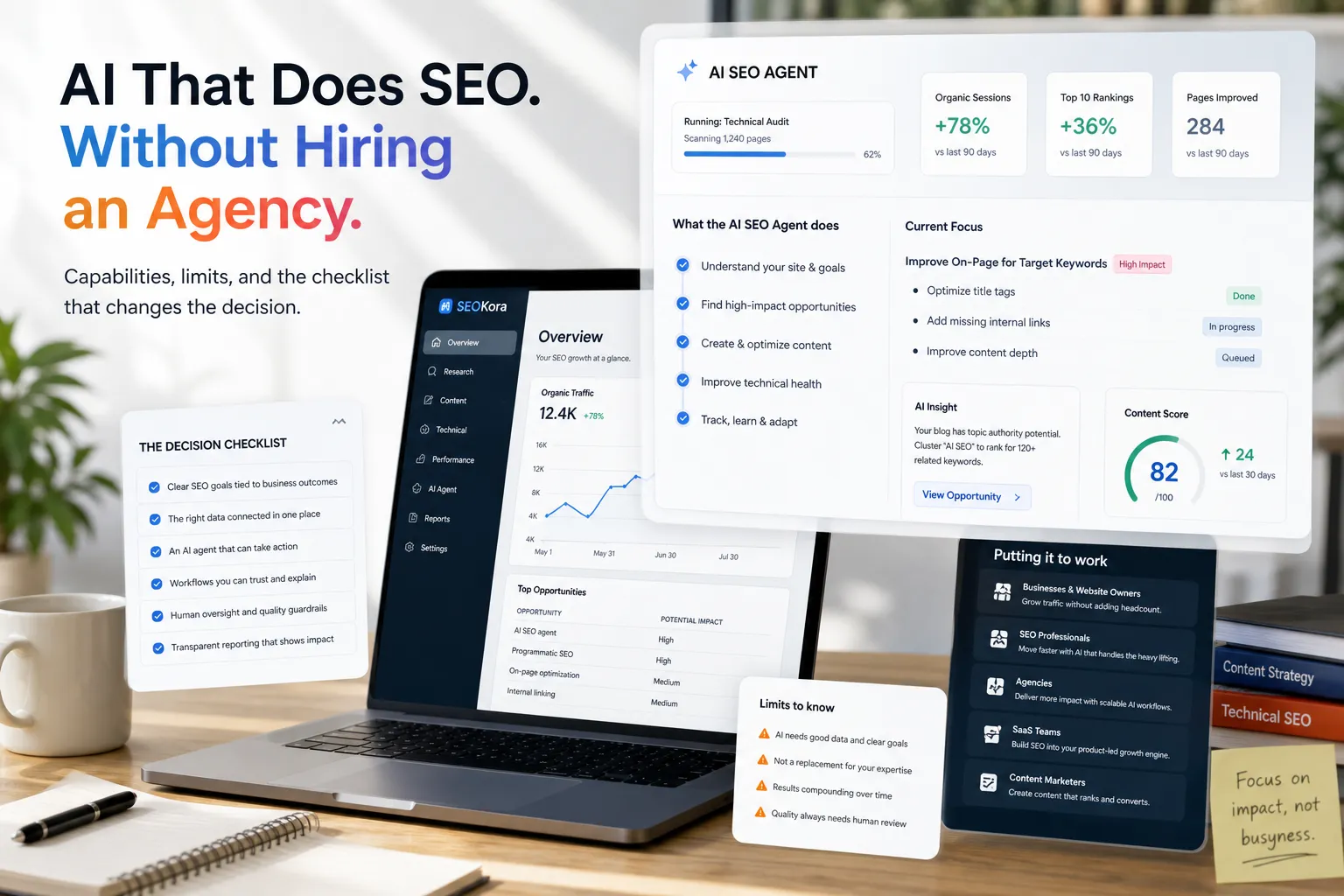
This is where automation and editorial judgment need to work together. SEOKora’s article on AI that does SEO (opens in new tab) frames the issue well: AI and automation can support SEO tasks, but oversight still matters. The practical takeaway for white label SEO automation is simple: automate the gathering, comparison, and monitoring; keep humans responsible for intent, positioning, quality, and risk.
For agencies, the same issue shows up in client delivery. If every strategist creates briefs differently, quality depends too heavily on who is available. If the process is automated but not reviewed, content can become generic. The stronger path is a controlled workflow: automation surfaces the opportunity and structure, while the SEO lead decides whether the recommendation is commercially relevant, accurate, and worth sending to the client under the agency’s brand.
Practical white label SEO automation workflows
The best starting point is not to automate everything. Choose one recurring SEO workflow where quality is uneven, handoffs are slow, or reporting fails to create action. Then define what the software should do, what a person must approve, and what output is safe to share with a client or internal stakeholder.
Workflow 1: From Search Console signal to page action
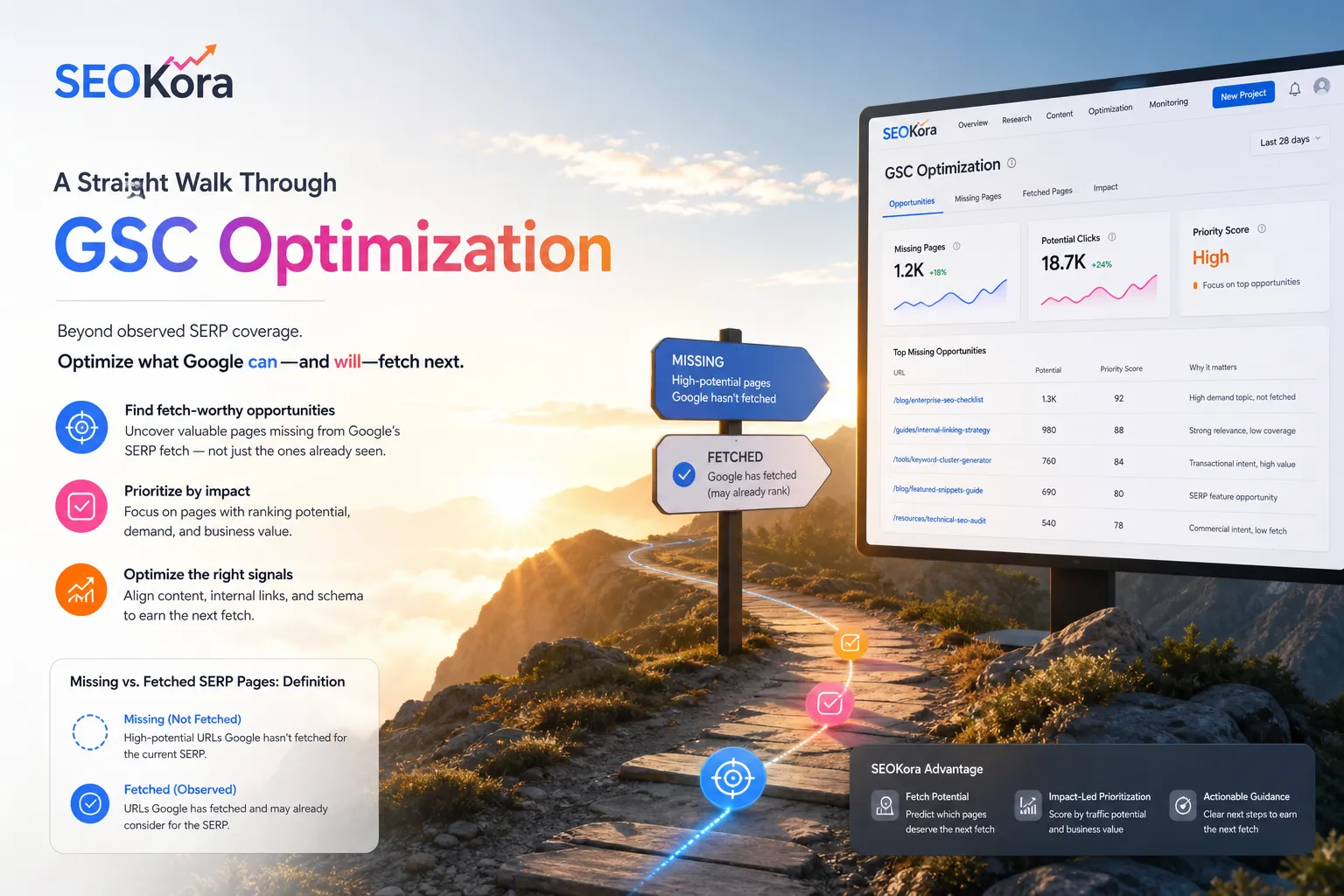
A common problem is that Google Search Console data is available but underused. A page may be losing impressions, gaining clicks for the wrong query, or sitting close to a ranking improvement. Automation can help identify the pattern, but the useful output is the next action: refresh the introduction, expand a missing section, consolidate overlapping pages, improve internal links, or leave the page alone because the signal is too weak.
SEOKora’s guide to Search Console automation (opens in new tab) is relevant because it focuses on moving from data to SEO action. That is the distinction businesses should care about. A white label report that repeats metrics is less useful than a workflow that explains what changed and what should be reviewed next.
Workflow 2: From content gap to brief
Instead of asking a writer to “write about topic X,” automation can help identify the intent, related subtopics, competing page angles, and internal pages that should be considered. The human editor then decides what the page should say that is actually useful and brand-specific. For SEOKora-style organic growth work, the brief should not only list keywords; it should clarify the decision the reader is trying to make.
Workflow 3: From backlink prospect to authority decision
Backlink automation can collect prospects and compare authority signals, but the decision still requires judgment. A competitor backlink is evidence, not entitlement. A business still needs to decide whether the site is relevant, whether the placement makes sense, and whether outreach would support real authority. SEOKora’s resource on AI backlink automation (opens in new tab) is useful here because it treats automation as a way to narrow the field, not as permission to pursue every discovered link.
Common mistakes that make white label automation expensive
The first mistake is confusing white label with invisible. A client or internal stakeholder may not see the underlying platform, but they will see the quality of the decisions. If recommendations are vague, repetitive, or disconnected from the site’s actual search position, the branded layer will not protect trust.
The second mistake is automating outputs before standardizing inputs. If page goals, target markets, business priorities, and existing content relationships are unclear, automation may produce polished but misdirected recommendations. A content brief can look complete while still targeting the wrong intent. A report can look professional while failing to explain why traffic changed.
The third mistake is treating AI SEO advice as universal. SEOKora’s AI SEO specialist guide (opens in new tab) makes a useful distinction: advice must match the job. A SaaS comparison page, a local service page, and a content hub do not need the same optimization pattern. White label SEO automation should make that difference easier to manage, not flatten every page into the same checklist.
The fourth mistake is removing review from high-impact actions. Publishing content, changing canonical strategy, pruning pages, rewriting commercial copy, or pursuing link outreach all carry consequences. Automation can recommend, organize, and monitor these tasks, but a qualified person should still approve decisions that affect revenue pages, brand claims, or site architecture.
The correction is to separate the workflow into three layers:
- Automate: data collection, clustering, monitoring, brief preparation, opportunity surfacing, and repetitive reporting.
- Review: intent fit, business relevance, accuracy, prioritization, and risk.
- Deliver: client-ready recommendations, approved content changes, outreach plans, or performance explanations under the appropriate brand process.
What automation still cannot decide for you
White label SEO automation has limits, and the limits matter most when the stakes are high. It cannot fully know your commercial priorities unless those priorities are built into the workflow. It cannot guarantee that a page deserves to rank. It cannot turn weak positioning into authority by formatting a better report. It also cannot replace the editorial responsibility of deciding whether a claim is accurate, whether a recommendation is appropriate, or whether a piece of content genuinely helps the reader.
There are also practical constraints around data. Search data can be delayed, incomplete, or noisy. Ranking movement can reflect competitors, technical changes, search intent shifts, seasonality, or algorithm updates. Automation can highlight patterns, but the interpretation still needs context. If a page loses impressions, the answer is not automatically “publish more content.” It may need consolidation, technical review, better internal linking, or no immediate action until the signal is clearer.
The same caution applies to AI-generated SEO recommendations. AI can speed up research and drafting, but it can also produce generic advice if the workflow lacks site context. For businesses using white label SEO automation, the goal should be defensible acceleration: faster work that still has a clear reason behind it.
What does white label SEO automation mean for businesses?
It means using automated SEO workflows that can support your own brand, client delivery, or internal process. The important part is not the label on the report; it is whether the workflow helps you find opportunities, improve pages, monitor performance, and explain decisions clearly.
Can AI fully replace a human SEO specialist?
No. AI and automation can handle many repetitive SEO tasks, but a human still needs to judge search intent, business relevance, technical risk, content quality, and whether a recommendation should actually be implemented.
How is an AI SEO specialist different from a content marketer?
An AI SEO specialist workflow focuses on search intelligence, optimization signals, and performance patterns. A content marketer brings audience understanding, positioning, messaging, and editorial judgment. Strong SEO programs usually need both perspectives.
How should a business start without overcomplicating the process?
Start with one workflow that already causes friction: content briefs, Search Console reviews, backlink prospecting, or performance reporting. Define the decision you want the workflow to support, then add automation around that decision instead of automating every task at once.
Your next move with SEOKora
The hidden cost of ignoring white label SEO automation is not just lost time. It is the slow accumulation of unclear priorities, inconsistent recommendations, underused data, and content that does not connect to a search growth system. The businesses that get more from automation are usually not the ones that remove people from SEO. They are the ones that use software to make human SEO decisions faster, clearer, and easier to defend.