SEO Automation Alternative: Choosing a More Controlled Approach to Organic Growth
Explore SEO automation alternatives, including manual, assisted, managed, and hybrid workflows. Learn how to choose an approach with the right level of control.

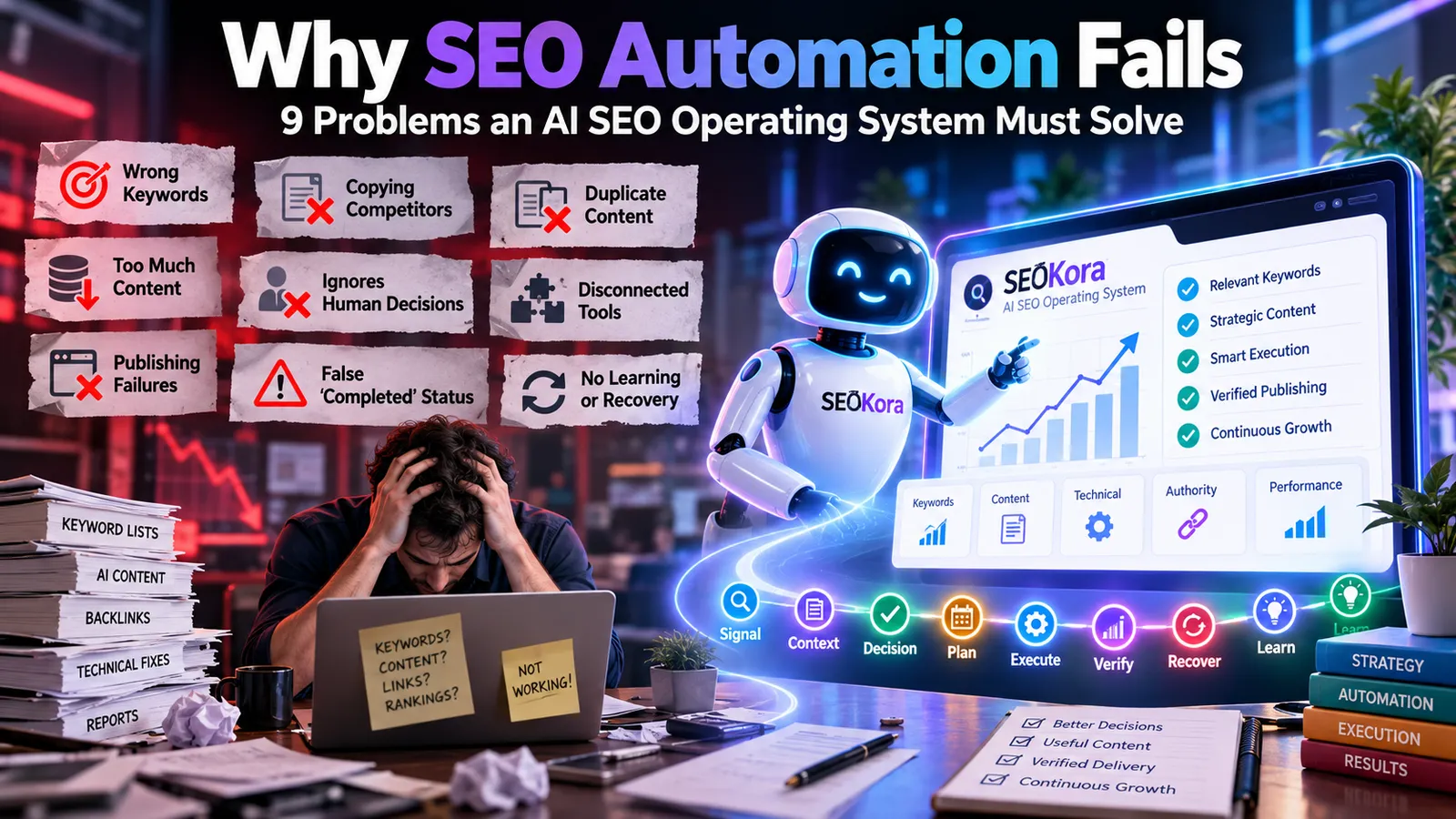
SEO automation can reduce repetitive work, but full automation is not the only way to operate. Teams may instead choose manual execution, assisted workflows, managed services, internal systems, or a hybrid model that combines software with human review.
The right SEO automation alternative depends on what you need to accomplish, how much oversight you want, and which decisions should remain in human hands. This guide outlines the main alternatives and provides a practical framework for choosing between them.
Contents
- What is an SEO automation alternative?
- Why consider an alternative?
- Five operating models to consider
- Comparison of the alternatives
- How to choose the right approach
- How to build a hybrid workflow
- Questions to ask before choosing
- Frequently asked questions
What Is an SEO Automation Alternative?
An SEO automation alternative is any operating model that replaces or limits fully automated SEO execution. Instead of allowing a system to make and implement every decision, an alternative may introduce manual work, structured approvals, specialist support, or selective automation.
This does not require rejecting software. In many cases, the practical alternative is to use software for defined tasks while keeping strategy, prioritization, quality control, and publication decisions under human oversight.
The main distinction is therefore not simply “software versus no software.” It is how responsibility is divided between tools and people.
Why Consider an Alternative to Full SEO Automation?
Automation is most useful when a task has clear inputs, repeatable rules, and predictable outputs. SEO also includes decisions that depend on context, business priorities, editorial judgment, and technical constraints. Those decisions may require a different operating model.
You want greater editorial control
A controlled workflow allows an editor or subject-matter reviewer to assess whether a page is useful, accurate, appropriately structured, and aligned with its intended audience before publication.
Your website has technical dependencies
Changes to templates, navigation, metadata, redirects, structured data, and internal links can affect more than one page. Human approval can help teams account for dependencies before implementation.
Your priorities change frequently
A fixed automation rule may not reflect a new product priority, a revised audience, or a change in available resources. A more flexible model allows the team to reprioritize work without redesigning the entire process.
You need clear accountability
When people approve recommendations and implementations, it is easier to establish who selected the task, who reviewed it, and why the change was made.
You do not want to automate every task
Some teams only need help with discovery, organization, or drafting. They may prefer to keep final decisions and website changes outside the automated workflow.
Five SEO Automation Alternatives
1. Fully manual SEO
In a fully manual model, people perform research, planning, writing, optimization, implementation, and review. Spreadsheets, documents, and basic website tools may support the process, but automated systems do not drive execution.
Best suited to: teams that value direct control and have enough internal capacity to manage the work.
Primary consideration: manual execution can require substantial coordination, especially when the site or workload grows.
2. SEO software with human approval
This assisted model uses software to surface opportunities, organize work, or prepare recommendations. A person then reviews each recommendation before it becomes a website change.
Best suited to: teams seeking efficiency without giving up approval authority.
Primary consideration: the workflow needs clear review criteria so that approvals are meaningful rather than automatic.
3. A hybrid SEO workflow
A hybrid workflow automates selected repeatable steps while assigning contextual work to people. For example, a team might standardize task collection and status tracking while retaining human ownership of strategy, writing, technical review, and publishing.
Best suited to: teams that want to balance speed, control, and available capacity.
Primary consideration: responsibilities must be explicit. Every task should have a defined owner and approval path.
4. Managed SEO support
Under a managed model, an external provider or specialist performs some or all of the SEO work. The client may approve strategy and major changes while delegating research, production, or implementation.
Best suited to: organizations that need specialist capacity but do not want to build every function internally.
Primary consideration: scope, access, approvals, deliverables, and ownership should be established before work begins.
5. An internal SEO operating system
An internal operating system is a documented process built around the organization’s own roles and tools. It may include templates, checklists, editorial standards, technical review steps, and reporting routines.
Best suited to: teams with established expertise and recurring SEO needs.
Primary consideration: internal systems need ongoing ownership. Documentation must remain aligned with the way the team actually works.
Comparing SEO Automation Alternatives
| Approach | Human oversight | Internal capacity needed | Workflow flexibility | Key requirement |
|---|---|---|---|---|
| Fully manual SEO | High | High | High | Available expertise and time |
| Software with approval | High at decision points | Moderate | Moderate to high | Defined review standards |
| Hybrid workflow | Selective | Moderate | High | Clear division of responsibilities |
| Managed support | Based on agreed scope | Low to moderate | Based on engagement terms | Clear scope and communication |
| Internal operating system | High | High initially | High | Process ownership and maintenance |
No model is universally best. A team with experienced editors and developers may prefer an internal process, while a smaller team may need assisted or managed execution. The appropriate choice follows from the work, the available capacity, and the acceptable level of oversight.
How to Choose the Right SEO Automation Alternative
Step 1: Define the outcome
Start with the result you need rather than the type of tool you want. The outcome might involve producing new content, improving existing pages, resolving technical issues, or creating a consistent review process.
Step 2: Separate repeatable tasks from judgment-based work
List the steps required to reach the outcome. Mark each step as either repeatable or context-dependent. Repeatable tasks may be suitable for structured assistance. Context-dependent work should have a qualified owner.
Step 3: Identify required approvals
Decide which actions require editorial, technical, legal, brand, or business approval. The chosen model should make those checkpoints visible rather than bypassing them.
Step 4: Assess internal capacity
Consider who can plan, produce, review, implement, and maintain the work. A manual process is only practical when the necessary people have enough time to operate it consistently.
Step 5: Evaluate website access
Determine whether the workflow needs read-only access, recommendation-level access, draft creation, or direct publishing permissions. Use the lowest level of access that still supports the intended task.
Step 6: Define quality controls
Document what must be checked before any change goes live. Depending on the task, this may include accuracy, relevance, originality, page intent, internal linking, metadata, formatting, accessibility, and technical compatibility.
Step 7: Test the process on a limited scope
Begin with a bounded group of tasks or pages. Review the outputs, approval burden, implementation effort, and clarity of ownership before applying the process more broadly.
How to Build a Human-Led Hybrid SEO Workflow
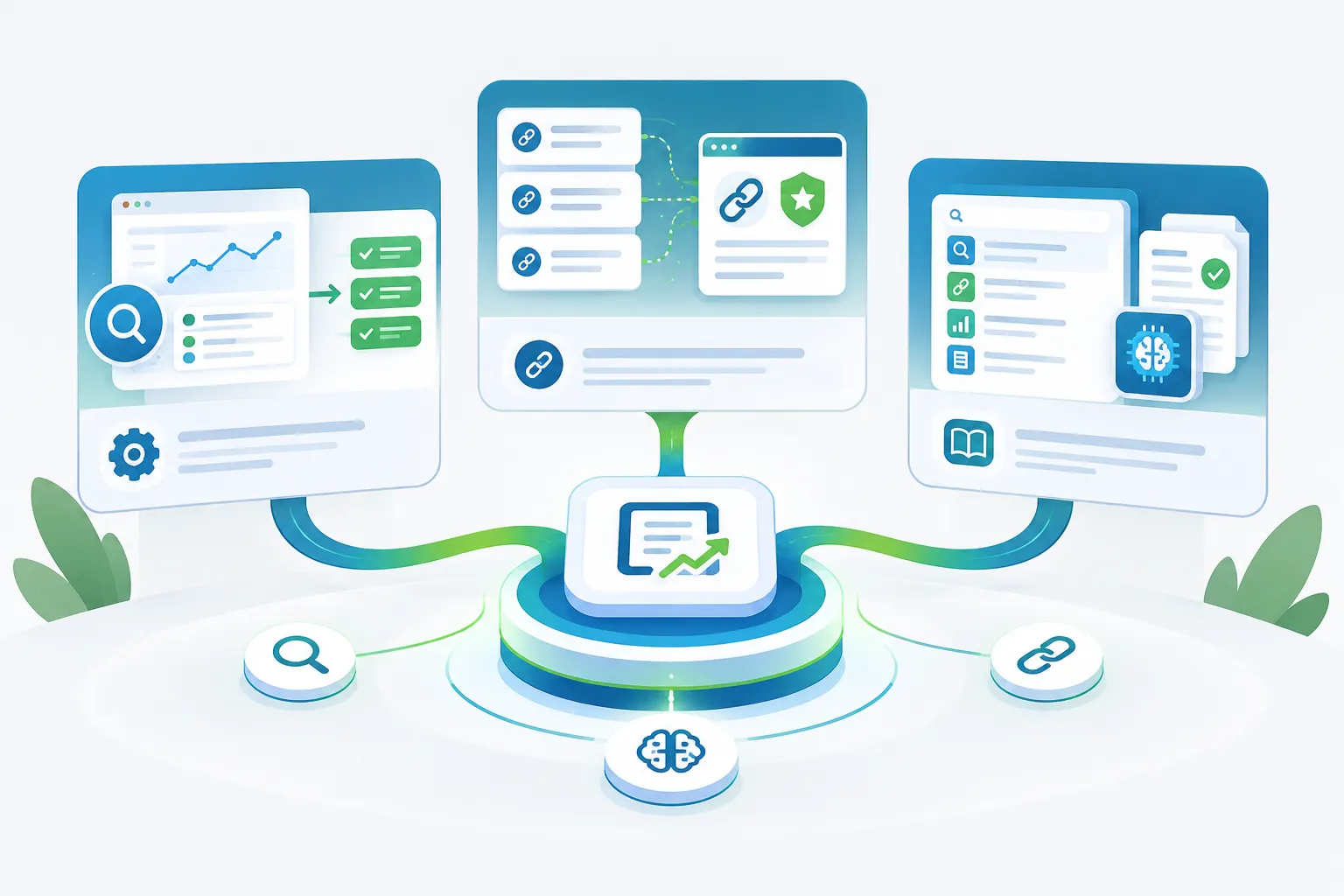
For many teams, the most practical SEO automation alternative is not a single tool or a completely manual process. It is a controlled workflow in which assistance is used selectively.
- Set priorities: A person defines the audience, business objective, website area, and acceptable scope.
- Collect opportunities: Tools or team members assemble potential tasks for review.
- Validate relevance: An SEO owner confirms that each task supports the intended page and audience.
- Create the deliverable: A writer, editor, specialist, or assisted process prepares the content or recommendation.
- Review quality: The appropriate owner checks the work against documented standards.
- Approve implementation: A responsible person authorizes the website change.
- Record the change: The team documents what changed, where it changed, and why.
- Reassess: The team reviews the process and adjusts future priorities where necessary.
This structure keeps decision-making visible while still allowing repeatable work to be organized efficiently.
What Should Remain Under Human Oversight?
The appropriate boundary varies by organization, but teams should explicitly assign ownership for high-context or high-impact decisions. These may include:
- Choosing target audiences and search intent
- Setting business and editorial priorities
- Verifying factual accuracy
- Approving claims and brand language
- Changing templates, navigation, or site architecture
- Creating or modifying redirects
- Publishing, removing, or consolidating pages
- Granting website access and permissions
- Resolving conflicts between recommendations
Human oversight does not mean every task must be performed manually. It means a responsible person retains authority over decisions that depend on context or may have broader consequences.
Questions to Ask Before Selecting an Alternative
- Which specific SEO tasks do we need help completing?
- Which steps are safe to standardize?
- Which decisions require editorial or technical judgment?
- Who is accountable for final approval?
- Will recommendations be delivered, drafted, or implemented?
- What level of website access is required?
- Can every change be reviewed before publication?
- How will tasks and completed changes be documented?
- Does the process fit our current team capacity?
- Can the workflow adapt when priorities change?
Clear answers make it easier to compare options on operating fit rather than feature lists alone.
The Bottom Line
The best SEO automation alternative is the model that matches your goals, capacity, website constraints, and preferred level of control. Fully manual work offers direct oversight but requires internal resources. Managed support adds external capacity. Assisted and hybrid workflows occupy the middle ground by combining structured processes with human decisions.
Before selecting an approach, define the work, assign ownership, establish approval points, and decide which tasks should never proceed without review. This creates an SEO process that is controlled by design rather than dependent on an all-or-nothing choice between manual work and automation.
Limitations and honest caveats
This guide cannot guarantee outcomes for every artist, market, or release plan. Treat the steps as a practical framework: adapt them to your capacity, rights situation, and goals, and verify platform or legal requirements for your region before acting.
Frequently Asked Questions
What is the best alternative to SEO automation?
There is no universal best alternative. The right choice may be fully manual SEO, software with human approval, a hybrid workflow, managed support, or an internal operating system. The decision should reflect your objectives, internal capacity, technical environment, and required level of control.
Can SEO software be used without automating website changes?
Yes. Software can support research, organization, drafting, or recommendations while people retain responsibility for review, approval, and implementation.
What is a hybrid SEO workflow?
A hybrid SEO workflow assigns repeatable or structured tasks to software-assisted processes while keeping contextual decisions, quality control, and selected website changes under human oversight.
Is manual SEO always safer than automation?
Manual execution still depends on the quality of the process and the people performing the work. A controlled workflow should include appropriate permissions, review criteria, accountable owners, and documented changes whether tasks are manual or assisted.
How can a team test an SEO automation alternative?
Start with a limited set of tasks or pages. Define the intended outcome and approval process, review each deliverable, and assess whether the workflow fits the team before expanding its scope.
Continue Exploring Organic Growth Resources
Review additional SEO intelligence and organic growth resources from SEOKora.
Frequently asked questions
There is no universal best alternative. The right choice may be fully manual SEO, software with human approval, a hybrid workflow, managed support, or an internal operating system. The decision should reflect your objectives, internal capacity, technical environment, and required level of control.
Yes. Software can support research, organization, drafting, or recommendations while people retain responsibility for review, approval, and implementation.
A hybrid SEO workflow assigns repeatable or structured tasks to software-assisted processes while keeping contextual decisions, quality control, and selected website changes under human oversight.
Manual execution still depends on the quality of the process and the people performing the work. A controlled workflow should include appropriate permissions, review criteria, accountable owners, and documented changes whether tasks are manual or assisted.
Start with a limited set of tasks or pages. Define the intended outcome and approval process, review each deliverable, and assess whether the workflow fits the team before expanding its scope.