
Backlink Strategy: How to Earn Links That Actually Build Website Authority
Learn how to build a backlink strategy using relevant links, competitor research, link-worthy assets and authority opportunities without relying on spammy link building.
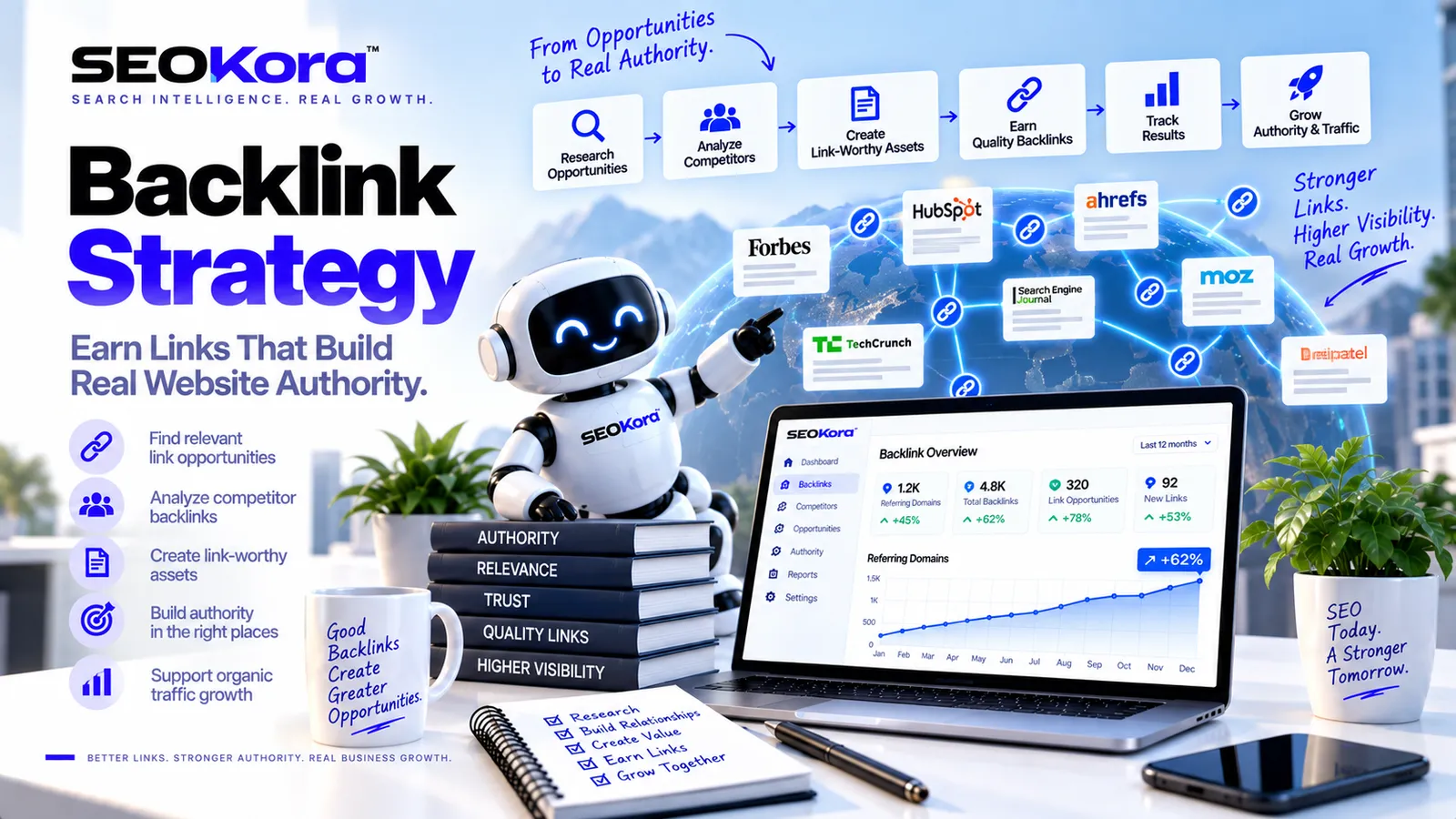
Backlinks are one of the most misunderstood parts of SEO.
Businesses hear things like:
“You need more backlinks.”
So they start chasing numbers.
100 backlinks.
500 backlinks.
1,000 backlinks.
But that is usually the wrong place to start.
A backlink is not valuable simply because it exists.
The real questions are:
- Who is linking to you?
- Why are they linking?
- What page are they linking from?
- What are they linking to?
- Is the source relevant to your business?
- Would the link make sense to a real reader?
- Does the link help establish your website within the right market?
A strong backlink strategy is not about collecting the largest number of links. It is about earning relevant references that strengthen your website's authority, discovery, and position within its market.
That difference matters.
Because good backlinks can support a wider SEO strategy.
Bad link building can waste money, create noise, and in some cases cross into search spam.
This guide explains how to approach backlinks as part of a real authority-building system — and how SEOKora can connect backlink research with competitors, content, business relevance, authority gaps, prioritization, and continuous SEO growth.
What Is a Backlink?
A backlink is a link from another website to your website.
For example, imagine an industry publication writes an article about SEO automation platforms and references a useful research guide on your website.
That link is a backlink.
But backlinks can serve several purposes at the same time.
They can:
- help people discover your website,
- send referral traffic,
- connect your business with relevant topics and markets,
- create external references to useful content,
- support broader website authority,
- and help search systems discover relationships across the web.
This is why backlinks matter.
But it is also why treating every backlink as equal creates problems.
What Is a Backlink Strategy?
A backlink strategy is a planned approach to identifying, creating, earning, and monitoring relevant links and external references that can support a website's authority and organic search growth.
A useful backlink strategy is not:
Find website → place link → repeat 1,000 times.
A better model is:
Understand the Business → Understand the Market → Analyze Existing Authority → Research Competitors → Find Authority Gaps → Discover Opportunities → Qualify Sources → Create Something Worth Referencing → Earn Legitimate Links → Monitor → Learn
This connects directly with our Website Authority guideSEOKora.
Backlinks are one part of authority.
They are not the entire definition of authority.
Why Do Backlinks Matter for SEO?
The web is built through connections.
Websites reference:
- research,
- companies,
- products,
- tools,
- statistics,
- people,
- guides,
- news,
- resources,
- and other useful information.
When relevant websites naturally reference your content or business, those references become part of your wider presence on the web.
That can matter for SEO because search visibility is not built only by what a website says about itself.
External recognition matters too.
But the context of that recognition is important.
Not Every Backlink Has the Same Value
Imagine two links.
The first comes from a respected publication in your industry inside an article directly related to your expertise.
The second comes from an unrelated website containing thousands of random outbound links.
Both may technically be backlinks.
But they do not represent the same thing.
This is why backlink analysis needs more than a simple count.
What Makes a Backlink Valuable?
There is no single number that perfectly defines backlink quality.
A useful evaluation should consider several signals together.
1. Relevance
Start with relevance.
If SEOKora receives a natural reference from a respected SEO, digital marketing, SaaS, search technology, or business-growth publication, the relationship is easy to understand.
If the same link appears on an unrelated website about a completely different subject with no meaningful context, the relationship is much weaker.
Ask:
Why would the audience of this website reasonably care about this destination?
If there is no good answer, the opportunity may not be very useful.
2. Page Context
The website itself matters, but so does the actual page containing the link.
A contextual reference inside useful information can be very different from a random link placed in:
- a footer,
- a giant unrelated directory,
- a comment section,
- a template,
- or a page created mainly to distribute links.
Evaluate the page, not just the domain.
3. Editorial Reason
A useful backlink normally has a reason to exist.
Maybe your website provides:
- a useful statistic,
- original research,
- a tool,
- a calculator,
- a strong explanation,
- a template,
- a dataset,
- a case study,
- or a resource that improves the referring page.
That reason matters.
The strongest backlink strategy often starts by asking:
Why would another website genuinely want to reference us?
4. Source Quality
Look at the website itself.
Does it appear to be a real publication, company, organization, community, or useful resource?
Does it have an identifiable purpose?
Does it publish content for actual readers?
Is the content maintained?
Does the site appear connected to your market?
Or does it look like it exists mainly to sell or distribute links?
These questions can be more useful than blindly trusting one third-party authority score.
5. Potential Audience
A backlink can have value beyond search rankings.
A relevant link can send:
- potential customers,
- journalists,
- researchers,
- partners,
- industry professionals,
- or people genuinely interested in your subject.
That makes the link useful even before thinking about SEO.
6. Destination Quality
The page receiving the backlink matters too.
Why would someone link to it?
If the destination is thin, generic, outdated, or purely promotional, earning strong editorial references becomes much harder.
Backlink development and content quality therefore need to work together.
Backlinks and Website Authority Are Connected — But They Are Not the Same Thing
It is easy to reduce authority to:
More backlinks = more authority.
Reality is more complicated.
Website authority can involve:
- useful content,
- topical depth,
- brand recognition,
- entity clarity,
- internal linking,
- technical accessibility,
- external references,
- relevant backlinks,
- credible mentions,
- and real value within the market.
A backlink strategy should therefore strengthen the wider authority system rather than operate as a separate link-counting project.
Read our Website Authority guideSEOKora for the broader framework.
Start With Your Existing Backlink Profile
Before chasing new backlinks, understand what already exists.
Useful questions include:
- Which websites already reference us?
- Which pages receive the most links?
- Which topics naturally attract references?
- Are important commercial pages supported by relevant authority?
- Do we have strong links to useful resources but weak internal connections to important pages?
- Are there broken destinations wasting existing references?
- Are there suspicious or irrelevant patterns worth reviewing?
This creates an authority baseline.
Competitor Backlink Analysis Can Reveal the Market
Competitor backlinks can be extremely useful.
But the objective should not be:
“Copy every backlink our competitor has.”
Instead ask:
- Which publications repeatedly reference competitors?
- Which industry resources mention them?
- Which directories actually matter in this market?
- Which associations or organizations reference them?
- Which competitor pages attract the most links?
- What type of content earns those references?
- Are competitors being mentioned because of research, tools, partnerships, products, data, or expertise?
- Where do several competitors have authority that we do not?
This turns competitor backlink analysis into market intelligence.
What Is a Backlink Gap?
A backlink gap exists when relevant websites or market sources reference competitors but do not reference your business.
For example, imagine five respected industry resources list useful platforms in your category.
Three repeatedly mention your competitors.
Your business appears in none of them.
That does not automatically mean you deserve a link.
But it creates a useful research question:
Why are competitors being referenced there and we are not?
Possible reasons might include:
- they have stronger resources,
- they have been in the market longer,
- they have better relationships,
- their product is better understood,
- their brand is easier to verify,
- they provide useful data,
- or the publication simply does not know you exist.
Understanding the reason is more valuable than blindly sending outreach.
Find Patterns, Not Just Domains
One of the most useful things competitor analysis can reveal is a pattern.
Suppose competitors consistently earn links from:
- software comparison sites,
- SEO newsletters,
- marketing publications,
- industry directories,
- research articles,
- university resources,
- business associations,
- or specialist blogs.
That tells you something about how authority works in your market.
You can then investigate the category rather than copying individual links.
Good Backlink Strategies Usually Need Link-Worthy Assets
This is where many link-building campaigns fail.
They start outreach before creating anything worth linking to.
If your email says:
“Hello, please link to our homepage because we are a great company.”
why should the publisher care?
Now imagine you have created:
- original industry research,
- a useful free tool,
- a calculator,
- a comprehensive dataset,
- a market benchmark,
- a useful template,
- a visual framework,
- a detailed comparison methodology,
- or an exceptionally useful educational resource.
Now there is a reason to reference you.
Examples of Link-Worthy Assets
Original Research
Businesses often need evidence.
If you collect and publish useful original data, other writers may reference it when discussing the same subject.
Statistics and Data Resources
A well-maintained resource containing clearly sourced, useful statistics can become a reference point for journalists, writers, researchers, and other businesses.
Free Tools
A genuinely useful tool can attract links because it solves a problem.
Examples might include:
- calculators,
- generators,
- estimators,
- validators,
- diagnostic tools,
- or interactive resources.
Templates
Templates save people time.
If a template is genuinely useful to an audience, other resources may naturally recommend it.
Definitive Guides
A strong educational guide can attract references when it explains a difficult topic clearly and provides more value than existing resources.
But simply making an article longer does not make it link-worthy.
Depth needs to be useful.
Visual Resources
Original diagrams, frameworks, charts, maps, and visual explanations can be useful reference assets when they make complex information easier to understand.
Industry Benchmarks
Benchmark data can become valuable because businesses want to understand how their performance compares with the market.
Backlink Strategy Should Connect With Content Strategy
Content teams and backlink teams should not operate independently.
Imagine SEO research discovers an important topic.
Before creating another standard article, ask:
Could we create the best reference asset around this topic?
That changes the content brief.
Instead of producing something designed only to rank, you can create something designed to:
- rank,
- help customers,
- earn references,
- support internal pages,
- strengthen authority,
- and potentially improve AI/search discoverability.
This is a much stronger use of content investment.
Backlinks and Organic Traffic Growth Work Together
Our Organic Traffic Growth guideSEOKora explains why search growth requires more than publishing.
Sometimes a website already has:
- good content,
- good technical SEO,
- clear search intent,
- and strong topical coverage.
But stronger competitors still dominate important searches.
One possible difference may be external authority.
In that situation, publishing another similar article may not solve the real problem.
Authority development may deserve more attention.
Internal Links and Backlinks Should Work Together
External links may bring authority and discovery into a website.
Internal links help connect that value with the wider site structure.
For example, imagine a research report earns strong external references.
That report can naturally connect readers to:
- related educational resources,
- relevant product pages,
- service pages,
- supporting research,
- or other important destinations.
This creates a connected knowledge system rather than isolated pages.
Directories Can Be Useful — But Not Every Directory Is Worth Joining
Directories are often misunderstood.
Some directories are useful because real customers use them.
Examples may include:
- recognized industry directories,
- professional associations,
- legitimate local business platforms,
- software marketplaces,
- trusted supplier directories,
- or specialist resources used by the target audience.
Other directories exist mainly to create links.
The right question is not:
“Can we get a backlink here?”
Ask:
“Does our business genuinely belong here, and would a real customer have a reason to use this resource?”
Local Backlinks Can Be Especially Valuable for Local Businesses
A local business may not need backlinks from the biggest websites in the world.
Relevant local references can be more meaningful.
Depending on the business, opportunities might come from:
- local organizations,
- business associations,
- local media,
- community resources,
- suppliers,
- partners,
- events,
- local sponsorships,
- and legitimate local directories.
This should work alongside the wider approach described in our Local SEO StrategySEOKora.
Unlinked Brand Mentions Can Be Opportunities
Sometimes another website already mentions your:
- company,
- product,
- founder,
- research,
- tool,
- or resource
but does not link to the relevant page.
These can sometimes be useful outreach opportunities because the relationship already exists.
The publisher already knows the resource.
A polite request for a useful reference may make sense where the link genuinely improves the page for readers.
Broken Link Opportunities
The web changes constantly.
Pages disappear.
Resources move.
Old links break.
If a relevant website links to a resource that no longer exists and your website has a genuinely useful replacement, that can create an opportunity.
But relevance still matters.
Broken-link research should not become an excuse to pitch unrelated pages.
Digital PR Can Support Backlink Development
Backlinks can also come from being genuinely newsworthy or useful to publishers.
Digital PR may involve:
- original research,
- industry insights,
- expert commentary,
- new data,
- interesting trends,
- product innovation,
- or stories that publications genuinely want to cover.
The objective should be to create something worth discussing.
The backlink can then become a natural part of the reference.
Partnerships Can Create Natural References
Real business relationships can naturally create links.
For example:
- technology integrations,
- business partners,
- suppliers,
- professional organizations,
- joint research,
- events,
- education partners,
- or verified customer ecosystems.
The important word is real.
A partnership should not exist purely because two websites agreed to exchange links.
What About Guest Posting?
Guest contributions can be legitimate when the primary purpose is to provide useful expertise to another audience.
The problem begins when guest posting becomes an industrial link-manufacturing system.
If hundreds of low-quality articles are created mainly to insert optimized backlinks, the strategy has moved away from useful publishing and toward manipulation.
Focus on:
- relevant audiences,
- real expertise,
- useful contributions,
- editorial quality,
- and transparent relationships.
Should You Buy Backlinks?
This needs a clear distinction.
Advertising and sponsorship exist across the web.
Paying for exposure is not automatically the same thing as earning an editorial backlink.
But paying for links specifically to manipulate search rankings creates a different situation.
A backlink strategy should therefore distinguish between:
- earned editorial references,
- legitimate advertising or sponsorship,
- partnership relationships,
- and links created primarily to manipulate rankings.
Do not disguise paid promotion as independent editorial authority.
Avoid Automated Link Spam
Automation can help with backlink research.
It can help:
- collect data,
- discover competitors,
- find possible opportunities,
- classify websites,
- detect mentions,
- identify broken links,
- organize prospects,
- and monitor progress.
But automation should not mean:
- creating thousands of artificial links,
- spamming comments,
- submitting to every directory available,
- sending irrelevant outreach at massive scale,
- or manufacturing websites purely to link back to yourself.
Good automation makes research and prioritization smarter.
It does not automate spam.
Anchor Text Should Make Sense Naturally
Anchor text is the clickable text used in a link.
It can help users understand where a link leads.
But forcing the same exact commercial keyword into large numbers of backlinks is not a natural authority strategy.
Editorial links naturally vary.
They may use:
- the brand name,
- the article title,
- the product name,
- a descriptive phrase,
- or a simple contextual reference.
Focus on making links useful and understandable rather than trying to engineer every anchor phrase.
Do Not Judge Backlinks Using One Metric
SEO platforms often provide authority-style metrics.
These can be useful for comparison and research.
But they are third-party measurements.
They should not become the entire backlink strategy.
A website with an impressive metric may still be irrelevant to your audience.
A smaller specialist publication may have much stronger relevance.
Use metrics as evidence.
Not as the final decision.
How to Qualify a Backlink Opportunity
A practical qualification process can examine:
Relevance → Audience → Page Context → Source Quality → Editorial Reason → Destination Fit → Risk → Effort → Potential Value
You can then classify opportunities.
For example:
HIGH PRIORITY — highly relevant, legitimate source, strong audience fit, realistic reason for inclusion.
RESEARCH FURTHER — potentially useful but needs more context.
LOW PRIORITY — legitimate but weak relevance or limited value.
AVOID — spammy, manipulative, irrelevant, deceptive, or clearly designed primarily to sell ranking links.
Backlink Opportunity Does Not Mean Guaranteed Backlink
This distinction is important.
Software can discover a website that appears relevant.
It can identify that the site references competitors.
It can determine that your resource might fit.
It can prioritize the opportunity.
But it cannot honestly guarantee that an independent publisher will link to you.
The final decision belongs to the publisher.
Good backlink software should therefore talk about:
opportunities, relevance, qualification, outreach potential, and results
rather than pretending every discovered prospect is a guaranteed backlink.
How SEOKora Approaches Backlink Strategy
This is where SEOKora can make backlink development much more useful.
Instead of treating backlinks as an isolated number, Kora can connect authority research with the wider business and SEO strategy.
The objective is not to find the largest possible list of websites. It is to identify authority opportunities that make sense for this particular business.
SEOKora starts with the business
Backlink research should change depending on the customer.
A local dentist, SaaS company, independent musician, ecommerce store, law firm, hotel, publisher, and international software platform should not receive the same authority strategy.
Kora can begin with context such as:
- business category,
- products and services,
- audience,
- industry,
- target countries,
- target cities where relevant,
- languages,
- content topics,
- and wider growth priorities.
This gives authority research a real direction.
SEOKora can analyze the existing authority position
Before deciding what is missing, Kora can evaluate what the website already has.
That can include understanding:
- existing referring sources,
- linked pages,
- authority distribution,
- important resources already attracting references,
- potentially weak areas,
- and the relationship between authority and important search topics.
The purpose is to establish a baseline.
SEOKora can discover the competitors that matter in search
A customer may provide known business competitors.
That direction is useful.
But Kora should not be limited to that list.
Search research can reveal additional websites competing for the same audience, topics, and queries.
Those search competitors can then become part of authority-gap analysis.
SEOKora can compare competitor authority patterns
Instead of simply saying:
“Competitor A has more backlinks.”
Kora can look for useful patterns.
For example:
- Which relevant sources mention multiple competitors?
- Which types of pages earn competitor links?
- Which publications repeatedly appear?
- Which market directories genuinely matter?
- Which competitor resources attract references?
- Which topics appear to earn authority?
- Where is the customer's website clearly underrepresented?
This turns backlink data into competitive intelligence.
SEOKora can identify authority gaps
An authority gap may exist when competitors have meaningful external validation around an important topic while the customer does not.
Kora can connect that gap with business relevance.
This helps distinguish:
“We have fewer backlinks.”
from:
“We are missing authority in a part of the market that matters to our growth.”
The second statement is much more actionable.
SEOKora can discover different types of backlink opportunities
Depending on the business and available research, opportunities may include:
- relevant industry directories,
- professional organizations,
- resource pages,
- publications,
- competitor link gaps,
- unlinked brand mentions,
- broken-resource opportunities,
- partnership opportunities,
- local citations and resources,
- software or product directories,
- research opportunities,
- and ideas for link-worthy assets.
The opportunity type should depend on the business.
Not on a universal backlink template.
SEOKora can qualify opportunities instead of dumping a list on the customer
A list of 5,000 domains is not automatically useful.
Kora can help evaluate prospects using factors such as:
- business relevance,
- topic relevance,
- audience fit,
- source legitimacy,
- competitor relationships,
- page context,
- likely opportunity type,
- potential value,
- and obvious risk signals.
The result should be a smaller, more useful set of opportunities.
SEOKora can separate research from human relationship decisions
This is an important boundary.
Software can do a large amount of backlink research.
It can discover and prioritize opportunities.
But relationship-based outreach may still benefit from human judgment.
A journalist, partner, industry organization, creator, or publisher is a real person or business.
Sending the same automated message to everyone can damage the opportunity.
Kora should therefore help make outreach smarter rather than turn genuine relationships into spam.
SEOKora can identify when the website needs a better asset first
Sometimes the problem is not outreach.
The website simply has nothing compelling to reference.
In that case, the correct recommendation may be:
Create the asset before pursuing the link.
Kora's content and authority systems can work together to identify opportunities for:
- research,
- data resources,
- tools,
- templates,
- deep guides,
- benchmarks,
- or other useful assets.
This is where backlink strategy becomes part of content strategy rather than a separate campaign.
SEOKora can connect authority with traffic opportunities
Not every page deserves the same backlink effort.
Suppose research identifies a topic with:
- strong business relevance,
- useful search demand,
- good content already published,
- correct technical setup,
- but much stronger competitor authority.
That page may deserve authority investment.
Kora can connect backlink research with organic traffic growthSEOKora so authority work supports opportunities that actually matter.
SEOKora can monitor authority development
Backlink work should not end when an opportunity is discovered.
Over time, Kora can help monitor relevant changes such as:
- new external references,
- lost references,
- changes around important competitors,
- new authority opportunities,
- linked assets gaining traction,
- and authority gaps that remain unresolved.
This turns authority development into an ongoing process rather than a one-time backlink campaign.
SEOKora connects authority with the wider SEO system
Backlinks should not exist in isolation.
Kora can connect authority research with:
- SEO strategy,
- organic traffic opportunities,
- keyword research,
- competitor intelligence,
- content gaps,
- content creation,
- existing-page improvements,
- internal linking,
- technical SEO,
- local SEO,
- AI visibility,
- and conversion priorities.
The bigger system becomes:
Understand → Research → Find Authority Gaps → Discover Opportunities → Qualify → Create Value → Earn References → Monitor → Learn → Improve
What SEOKora Should Not Do With Backlinks
A responsible authority system should not turn backlink development into spam.
SEOKora's goal should not be to:
- promise thousands of backlinks,
- automatically create links across random websites,
- buy links for ranking manipulation,
- submit customers to thousands of low-quality directories,
- spam blog comments,
- spam forums,
- create fake websites for backlinks,
- mass-produce low-value guest posts,
- force exact-match anchor text everywhere,
- fabricate publisher relationships,
- or guarantee that independent websites will link to a customer.
Those tactics may increase a backlink counter.
They do not represent the authority system we want to build.
A Better SEOKora Backlink Workflow
A practical workflow can look like this:
Business Context → Existing Authority → Search Competitors → Competitor Backlinks → Authority Gap → Opportunity Discovery → Qualification → Recommended Action → Link-Worthy Asset / Relationship / Outreach → Result Monitoring → Learning
Each stage answers a different question.
Business Context
What type of authority matters to this customer?
Existing Authority
What references and backlinks does the website already have?
Search Competitors
Who actually competes for the visibility that matters?
Competitor Backlinks
Where and why are competitors being referenced?
Authority Gap
Where is the customer underrepresented?
Opportunity Discovery
Which websites, resources, relationships, or assets could realistically close the gap?
Qualification
Which opportunities are relevant, legitimate, useful, and worth the effort?
Recommended Action
Should we create an asset, improve an existing resource, reclaim a mention, approach a publisher, pursue a partnership, or simply monitor?
Monitoring
Did anything actually happen?
Learning
Which approaches produced real authority and which ones did not?
Backlink Strategy Checklist
Frequently Asked Questions
What is a backlink?
A backlink is a link from another website to your website. Backlinks can help people discover your content and can contribute to the wider authority and external recognition of a website.
What is a backlink strategy?
A backlink strategy is a structured process for understanding existing authority, researching competitors, identifying relevant external opportunities, creating assets worth referencing, earning legitimate links, and monitoring how authority develops over time.
How do I get quality backlinks?
Start by creating something worth referencing. Then research relevant publications, organizations, directories, resource pages, partners, competitor link gaps, unlinked mentions, and other legitimate opportunities where your business or resource genuinely belongs.
How many backlinks do I need?
There is no universal number. The requirement depends on the market, competition, existing authority, topics being targeted, quality of the website, and strength of competing pages. Focus on the authority gap rather than chasing an arbitrary backlink count.
Are all backlinks good for SEO?
No. Backlinks vary greatly in relevance, context, source quality, purpose, and risk. A backlink should not be considered valuable simply because a crawler discovered it.
Are directory backlinks useful?
They can be when the directory is legitimate, relevant to the business, and genuinely used by the market or customers. Mass submission to unrelated low-quality directories is a very different strategy.
Should I copy my competitors' backlinks?
Competitor backlinks are useful research, but copying every link is not the goal. Analyze why competitors are being referenced, identify patterns and authority gaps, and decide which opportunities genuinely make sense for your business.
Can I buy backlinks?
Advertising and sponsorship can be legitimate marketing activities, but links purchased specifically to manipulate search rankings can create policy problems. Paid relationships should be handled transparently and appropriately rather than disguised as independent editorial recommendations.
What is a backlink gap?
A backlink gap is an area where relevant sources or market websites reference competitors while your website lacks comparable external recognition. The useful question is not only where the gap exists, but why it exists and what legitimate action could close it.
Can SEOKora find backlink opportunities?
SEOKora's authority workflow can use business context, competitor research, existing authority signals, market relevance, and opportunity analysis to help identify and prioritize potential backlink and authority opportunities. The objective is to surface useful prospects rather than generate a large unqualified domain list.
Does SEOKora automatically create backlinks?
SEOKora should not manufacture artificial links or spam websites. Automation is more useful for research, discovery, classification, prioritization, monitoring, and connecting authority opportunities with the wider SEO strategy. Independent publishers ultimately control whether they reference another website.
Can SEOKora guarantee backlinks?
No responsible platform can guarantee editorial backlinks from independent websites. Kora can help identify opportunities, improve the assets being promoted, prioritize prospects, and monitor results, but the final linking decision belongs to the external publisher.
Do backlinks guarantee higher rankings?
No. Search performance depends on many factors, including relevance, content quality, competition, technical accessibility, search intent, website structure, authority, and the nature of the query. Backlinks should be treated as part of the wider SEO system rather than a guaranteed ranking mechanism.
Final Takeaway
A backlink strategy should not begin with:
“How can we get 1,000 backlinks?”
Start with:
Where does this business need stronger authority?
Then ask:
Who already has that authority?
Who references our competitors?
Why are they being referenced?
Which opportunities are genuinely relevant to us?
What can we create that deserves to be referenced?
Which relationships are worth developing?
And did our authority actually improve?
The backlink growth loop becomes:
Understand → Analyze → Discover → Qualify → Create Value → Earn References → Monitor → Learn → Strengthen Authority
That is a much stronger strategy than chasing a backlink counter.
Build Authority With SEOKora
Backlink research can become overwhelming very quickly.
A business may discover thousands of domains, hundreds of competitor links, dozens of directories, endless outreach lists, and multiple authority scores.
But more data does not automatically create more authority.
The useful questions are:
Which authority gaps actually matter?
Which competitors should we analyze?
Which websites are genuinely relevant?
Which opportunities deserve attention first?
Do we already have something worth linking to?
Should we create a stronger asset first?
How does this authority opportunity support organic traffic growth?
And what changed after we acted?
SEOKora is designed to connect those questions with the wider SEO system.
Kora can bring together:
- business understanding,
- market research,
- search competitor discovery,
- existing authority analysis,
- competitor backlink intelligence,
- authority-gap detection,
- backlink opportunity research,
- opportunity qualification,
- content and link-worthy asset planning,
- organic traffic priorities,
- and ongoing performance monitoring.
Instead of treating backlink building as a separate numbers game, Kora can help connect authority development to the areas of the website where stronger external recognition can actually support the business.
The model becomes:
Research the Market → Understand the Authority Gap → Find Relevant Opportunities → Qualify Them → Create Something Worth Referencing → Build Legitimate Relationships → Monitor Results → Learn → Improve
That is the purpose of SEOKora's approach to backlinks.
Not more links at any cost. Better authority in the places that matter.